Hafez of Shiraz: Life, Poetry and Legacy of Iran's Beloved Poet
Who was Hafez? The poet of Shiraz, his ghazals of love, wine and faith, the Divan used for fal-e Hafez, and how he inspired Goethe and the world.
 Open the interactive map
Who was Hafez?
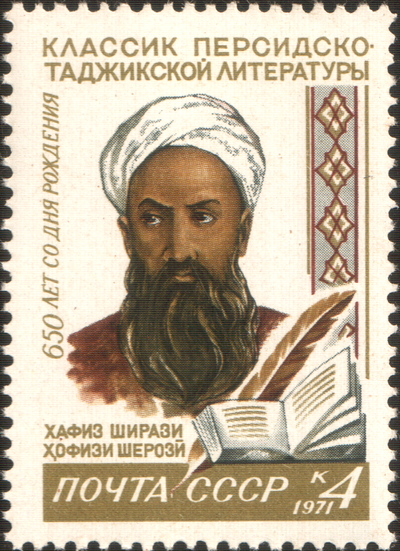
Hafez of Shiraz, Khwaja Shams al-Din Muhammad, was a fourteenth-century Persian poet whose collection of lyric poems, the Divan of Hafez, is the most loved and most quoted book of poetry in Iran. He was born in Shiraz around 1315 to 1325 and died there in 1389 or 1390. His pen name, Hafez, means one who has memorised the Quran, and in one ghazal he claims to know it by heart in fourteen recitations.
Persian readers call him Lesan al-Gheyb, 'the tongue of the unseen', because his verses seem to speak to each reader's situation. Hafez mastered the ghazal, a short lyric of rhyming couplets, and filled it with layered images of love, wine, the tavern and the hypocrisy of the pious. Nearly seven centuries later his lines are recited at weddings and funerals, set to music and opened at random for guidance.
Shiraz in an age of upheaval
Hafez lived through the breakup of the Ilkhanate, when rival local dynasties fought over southern Iran. Shiraz was ruled first by the Inju prince Abu Ishaq, a cultured patron whom Hafez remembered fondly. In 1353 the Muzaffarid Mubariz al-Din Muhammad took the city and imposed strict religious rule, closing taverns; many scholars read Hafez's mockery of the zealous muhtaseb, the morals inspector, as a response to this period. Mubariz al-Din's son Shah Shuja, who deposed and blinded his father in 1358, became Hafez's most important patron, though the poet also seems to have fallen out of favour at times.
Late in Hafez's life, in 1387, Timur took Shiraz. A famous anecdote has the conqueror rebuke the poet for offering Samarkand and Bukhara for the mole of a Turkish beloved, and Hafez reply with a witty excuse. The story first appears in Dowlatshah's biography of poets about a century later and is almost certainly legend. Other tales, such as an aborted journey to India, are similarly uncertain. Securely documented facts about Hafez's life are few, so his biography is largely reconstructed from his poems and their historical references.
The Divan of Hafez and the art of the ghazal
Hafez did not publish a book in the modern sense. His poems circulated in performance and in writing, and after his death they were gathered into a Divan; the preface traditionally credited to his friend Mohammad Golandam describes this collection. The Divan contains about 500 ghazals along with a smaller number of qasidas, quatrains and other forms. The oldest manuscripts date from within a few decades of his death and differ in the number, order and wording of poems, so modern editors reconstruct the text rather than recover one untouched original. The edition of Mohammad Qazvini and Qasem Ghani (1941) and that of Parviz Natel-Khanlari became standard references.
Hafez's art lies in compression and ambiguity. A single couplet can hold several meanings at once through iham, deliberate double meaning, and couplets within a ghazal often seem to move between themes. Some Western readers once called his poems disjointed; scholars now usually see a unity of mood, imagery and argument beneath the surface. His heroes are the rend, the clear-sighted libertine who is honest about his failings, and the Magian elder of the tavern; his targets are the ascetic, the preacher and the morals inspector who make a public show of piety.
Wine, love and mysticism: how to read Hafez
The oldest debate about Hafez is whether his wine and beloved are literal or mystical. Sufi commentators read the wine as divine love, the tavern as the place of spiritual surrender and the beloved as God. Other readers, including the Ottoman commentator Sudi, known for his literal explanations, and many modern scholars, stress the poems' earthly sensuality, their courtly setting and their sharp social satire. Some sixteenth-century Ottoman jurists even debated whether the Divan was fit for pious readers.
Most scholars today argue that the ambiguity is the point. Hafez wrote within a tradition in which the language of human love and the language of mystical longing had long overlapped, and he exploits that overlap so the reader cannot settle on one meaning. This is also why Hafez has been claimed by mystics, sceptics, nationalists and the devout alike, each finding a version of the poet that speaks to them.
Fal-e Hafez and the tomb in Shiraz
In Iran the Divan is not only read but consulted. In fal-e Hafez, a person makes a silent wish, opens the book at random and interprets the ghazal on the page as an answer. The practice is especially popular on Yalda night, the winter solstice, and at Nowruz, and street sellers in Iranian cities offer printed fortunes, sometimes picked from a box by a trained bird. Many Iranian homes keep a copy of the Divan beside the Quran, and it often appears on the Nowruz haft-sin table.
Hafez is buried in the Musalla gardens of Shiraz. The Zand ruler Karim Khan built a memorial over the grave in the 1770s, and the present open pavilion and garden, the Hafezieh, were designed in the 1930s by the French architect André Godard. The tomb is one of the most visited places in Iran, where visitors recite verses and take a fal at the grave, and Iranians mark a national Hafez day each autumn on 20 Mehr, around 12 October.
Hafez in the world: Goethe, Emerson and modern versions
Hafez's reputation crossed borders early. His Divan was copied and commented on throughout the Ottoman lands and Mughal India; the Bosnian-born scholar Sudi wrote a celebrated Turkish commentary in the sixteenth century. In Europe, the orientalist William Jones published versions of Hafez in the 1770s, and Joseph von Hammer-Purgstall's complete German translation of 1812 to 1813 inspired Goethe's West-Eastern Divan (1819), a cycle of poems conceived as a dialogue with Hafez. Ralph Waldo Emerson translated and praised him, and Gertrude Bell's 1897 versions remain admired.
Today many English readers meet 'Hafiz' through Daniel Ladinsky's popular books, which Ladinsky himself presents as inspired renderings rather than literal translations. Scholars point out that much of this material has no clear counterpart in the Persian Divan, and several quotes widely shared online under Hafez's name come from these books. For the poet's own voice, readers can turn to scholarly translations by Dick Davis and others, which keep closer to the Persian text.
Frequently asked questions
What is Hafez famous for?
Hafez is famous for his ghazals, short lyric poems that blend love, wine, mysticism and satire of religious hypocrisy. His Divan is the most widely read book of poetry in Iran and is also used for fal-e Hafez, a form of divination.
How does fal-e Hafez work?
The person makes a silent wish or asks a question, opens the Divan at random and reads the ghazal on that page as the answer. It is a cherished custom on Yalda night and at Nowruz.
Is Hafez's wine literal or mystical?
Both readings have long traditions. Sufi commentators see wine as divine love; others emphasise its earthly and satirical sense. Many scholars argue Hafez deliberately keeps both meanings open.
Where is Hafez buried?
Hafez is buried in Shiraz, Iran, at the Hafezieh, a garden tomb whose present pavilion was designed by André Godard in the 1930s on the site of an earlier memorial built by Karim Khan Zand.
Key events on the map
- 1370 CE · Hafez of Shiraz
- 1258 CE · Saadi of Shiraz
- 1387 CE · Tamerlane Conquers Iran
- 1762 CE · Shiraz: Zand Capital and Cultural Center
Guided storylines
- Hafez i. An Overview — Encyclopaedia Iranica
- Hafez ii. Hafez's Life and Times — Encyclopaedia Iranica
- Hafez x. Translations of Hafez in English — Encyclopaedia Iranica
- Hafez xi. Translations of Hafez in German — Encyclopaedia Iranica
- Goethe, Johann Wolfgang von — Encyclopaedia Iranica