Timurid Dynasty: Timur, Herat and the Timurid Renaissance
The Timurid dynasty (1370–1507): Timur’s violent conquests, then a Persianate golden age of art, poetry and astronomy in Herat and Samarkand.
 Open the interactive map
Who founded the Timurid dynasty?
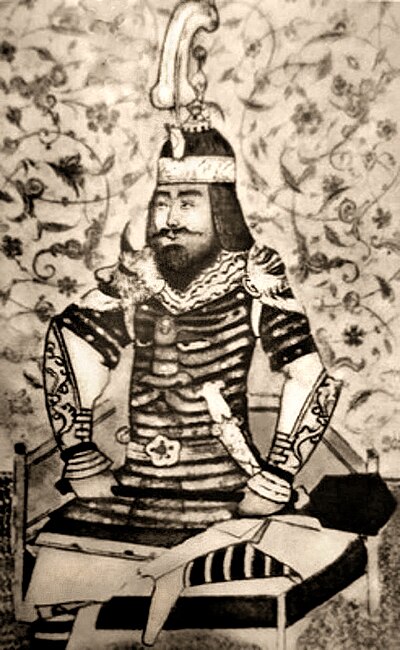
The Timurid dynasty was founded by Timur (Tamerlane in European sources), a Turkic-speaking commander of the Mongol Barlas tribe from Transoxiana. Because he was not descended from Chinggis Khan, he ruled through puppet khans and styled himself güregen, royal son-in-law, after marrying a Chinggisid princess. He was proclaimed ruler at Balkh in 1370 and made Samarkand his capital.
From the 1380s Timur invaded Iran, the Caucasus, Iraq, Syria, India and Anatolia. Contemporary chroniclers describe massacres and towers of skulls at cities such as Isfahan, Baghdad and Delhi; the exact numbers cannot be verified, but the destruction was real. In 1402 he defeated the Ottoman sultan Bayezid I at Ankara, and he died in 1405 at Otrar while preparing to invade Ming China.
The Timurid Renaissance in Herat and Samarkand
Timur’s heirs turned conquest into patronage. His son Shahrokh ruled from Herat, and Shahrokh’s wife Gowharshad commissioned the mosque that bears her name in Mashhad in 1418. Their son Ulugh Beg built a great observatory in Samarkand in the 1420s, whose star catalogue remained a reference for centuries. Prince Baysonghor’s workshop produced a celebrated Shahnameh manuscript in 1430. Under Sultan Husayn Bayqara, late fifteenth-century Herat was home to the poet Jami, the Chaghatay Turkic poet Ali-Shir Nava’i and the painter Behzad. Historians often call this flowering the Timurid Renaissance.
Decline and legacy
Timurid unity rarely outlasted a single ruler. Western Iran fell to the Turkmen Qara Qoyunlu and Aq Qoyunlu confederations, and in 1507 the Uzbeks under Muhammad Shaybani took Herat. Yet the dynasty’s artistic and administrative models passed to the Safavids, the Ottomans and above all the Mughals of India, founded in 1526 by Babur, a Timurid prince.
Timeline of events
1370 CE · Timur's Coronation in Balkh
Timur (Tamerlane), a Turco-Mongol conqueror from Transoxiana, is crowned sovereign at Balkh, founding the Timurid Empire. From here he will build one of the largest empires in history, conquering Persia, Mesopotamia, India, Anatolia, and the Caucasus through ruthless military campaigns. (Balkh, Afghanistan) View on map
1387 CE · Tamerlane Conquers Iran
Timur (Tamerlane) conquers Iran with devastating brutality, building towers of skulls at Isfahan in 1387. He claims descent from Genghis Khan and seeks to rebuild the Mongol Empire. (Isfahan) View on map
1398 CE · Timur's Invasion of India and Sack of Delhi
Timur invades the Delhi Sultanate, defeating Sultan Nasir-ud-Din Mahmud Shah Tughluq and sacking Delhi. The invasion causes massive destruction and the slaughter of tens of thousands. Timur carries away enormous wealth, including the treasures of the Delhi Sultanate, returning to Samarkand with his spoils. (Delhi, India) View on map
1398 CE · Timur Sacks Delhi
Timur (Tamerlane) invades India and sacks Delhi, massacring tens of thousands and carrying off enormous wealth to Samarkand. The Delhi Sultanate never recovers its former power, paving the way for new powers to rise. (Delhi, India) View on map
1402 CE · Battle of Ankara
Timur decisively defeats Ottoman Sultan Bayezid I at the Battle of Ankara, capturing him alive — one of the few times an Ottoman sultan was ever captured in battle. The defeat plunges the Ottoman Empire into an eleven-year civil war (the Ottoman Interregnum) and temporarily halts its expansion into Europe. (Ankara, Turkey) View on map
1405 CE · Timurid Renaissance in Herat
Under Shah Rukh and his wife Goharshad, Herat becomes the cultural capital of the Islamic world. Persian miniature painting, architecture, and literature reach new heights. (Herat) View on map
1405 CE · Death of Timur
Timur dies at Otrar while preparing a massive campaign against Ming China. His empire, stretching from Anatolia to India, fragments among his descendants. His grandson Shahrukh moves the capital to Herat, beginning the Timurid Renaissance — one of the greatest cultural flowerings in Islamic history. (Otrar, Kazakhstan) View on map
1418 CE · Goharshad Mosque Built
Queen Goharshad commissions the magnificent mosque adjacent to the shrine of Imam Reza in Mashhad, a masterpiece of Timurid architecture. (Mashhad) View on map
1420 CE · Ulugh Beg's Observatory in Samarkand
Timurid prince Ulugh Beg builds a major observatory in Samarkand and compiles the most accurate star catalogue of the medieval world with Iranian astronomers. (Samarkand) View on map
1430 CE · The Shahnameh's Enduring Legacy
The Shahnameh becomes Iran's national epic, recited in coffeehouses, illustrated in royal manuscripts, and performed by naqqali (storytellers) for centuries. With nearly 60,000 couplets and almost no Arabic loanwords, it preserves a purified Persian language. The Baysonghori Shahnameh (1430) and other illustrated editions become treasures of Islamic art. (Herat) View on map
1470 CE · Jami: Last Great Classical Persian Poet
Abd al-Rahman Jami, the last great classical poet of Persian literature, writes Haft Awrang and numerous works on Sufism in Herat. (Herat) View on map
Frequently asked questions
Was Timur Persian or Mongol?
Neither label fits neatly. Timur came from a Turkicised Mongol tribe, spoke Turkic and probably Persian, legitimised himself through Chinggisid and Islamic symbols, and relied on Persian scribes. His dynasty’s court culture became strongly Persianate.
What was the Timurid Renaissance?
It is a modern term for the fifteenth-century flowering of Persian poetry, manuscript painting, calligraphy, architecture and astronomy under Timur’s descendants, centred on Herat and Samarkand.
Key events on the map
- 1370 CE · Timur's Coronation in Balkh
- 1405 CE · Timurid Renaissance in Herat
- 1418 CE · Goharshad Mosque Built
- 1420 CE · Ulugh Beg's Observatory in Samarkand
Guided storylines
- Iran ii. Iranian History (2) Islamic Period (page 3) — Encyclopaedia Iranica
- Herat iii. History, Medieval Period — Encyclopaedia Iranica
- Gowhar-Šād Āḡā — Encyclopaedia Iranica
- Samarqand i. History and Archaeology — Encyclopaedia Iranica