Ilkhanid Dynasty: Mongol Rule in Iran (1256–1335)
The Ilkhanid dynasty: how Hulagu’s Mongol state ruled Iran from Tabriz and Maragheh, from the fall of Baghdad to Ghazan’s reforms and Soltaniyeh.
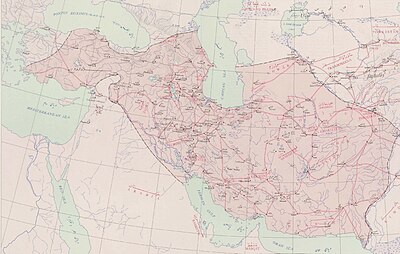 Open the interactive map
Who were the Ilkhanids?
The Ilkhanid dynasty was the branch of the Mongol imperial family that ruled Iran, Iraq, the South Caucasus and much of Anatolia from the 1250s until the death of Abu Sa‘id in 1335. Its founder, Hulagu, a grandson of Chinggis Khan, was sent west by his brother, the Great Khan Möngke. The title il-khan is usually understood to mean a khan subordinate to the Great Khan, a formal deference that faded as the Mongol empire split into rival states.
Hulagu’s campaign was brutal. In 1256 most Nizari Ismaili strongholds, including Alamut, surrendered, and in 1258 his army sacked Baghdad and executed al-Musta‘sim, the last Abbasid caliph to rule from Baghdad. A Mongol force was then defeated by the Mamluks at Ain Jalut in 1260, fixing a long frontier along the Euphrates.
Ilkhanid achievements: science, history and architecture
Mongol rulers governed through Persian administrators such as the Juvayni brothers, and their courts became meeting points for Iranian, Chinese and Central Asian knowledge. Hulagu funded Nasir al-Din Tusi’s observatory at Maragheh, which produced the Zij-i Ilkhani astronomical tables. After Ghazan Khan converted to Islam in 1295, he and his vizier Rashid al-Din pursued fiscal and administrative reforms, and Rashid al-Din compiled the Jami‘ al-Tawarikh, often called the first world history. Under Öljeitü, the new capital of Soltaniyeh received one of the largest brick domes in the world.
Decline and legacy
The conquest caused heavy loss of life and lasting damage to irrigation in some regions, although medieval casualty figures are not reliable and recovery varied from place to place. When Abu Sa‘id died without an heir in 1335, the state broke into regional powers such as the Jalayirids, Chupanids, Injuids, Muzaffarids and Sarbadars. Its legacy includes a Persian-speaking court culture open to wide Eurasian contacts, Tabriz as a major capital, and a renewed sense of Iran as a distinct political space.
Timeline of events
1256 CE · Ilkhanid Dynasty Established
Hulagu establishes the Ilkhanid dynasty ruling Iran and much of the Middle East. Despite Mongol origin, the dynasty gradually adopts Persian culture and converts to Islam. (Tabriz) View on map
1256 CE · Fall of Alamut Castle
Hulagu's forces capture and destroy the Ismaili fortress of Alamut, ending the Nizari Ismaili state after 166 years. Much of the famous Alamut library is burned. (Alamut Castle) View on map
1256 CE · The Library of Alamut
Alamut fortress houses one of the great libraries of the medieval world, containing rare manuscripts on philosophy, astronomy, mathematics, and Ismaili theology. When Hulagu's Mongols destroy the fortress in 1256, the historian Juvayni is allowed to salvage some volumes, but most of the library is lost forever — one of history's great intellectual tragedies. (Alamut) View on map
1258 CE · Saadi of Shiraz
Sheikh Saadi writes the Golestan and Bustan, masterpieces of Persian prose and poetry. His verse 'Children of Adam' adorns the UN headquarters. (Shiraz) View on map
1258 CE · Hulagu Destroys Baghdad
Hulagu Khan sacks Baghdad, ending the Abbasid Caliphate. The Tigris runs black with ink from destroyed libraries. However, Hulagu patronizes Iranian culture and science. (Baghdad) View on map
1259 CE · Nasir al-Din Tusi and Maragheh Observatory
Nasir al-Din Tusi, polymath and astronomer, persuades Hulagu to build the Maragheh Observatory — the most advanced in the world. His planetary models later influence Copernicus. (Maragheh) View on map
1260 CE · Battle of Ain Jalut
The Mamluk Sultanate of Egypt inflicts the first decisive defeat on the Mongol army at Ain Jalut in Palestine, halting their westward expansion. This battle is considered a turning point in world history, as it prevented the Mongol conquest of Egypt and North Africa and preserved the heartland of Islamic civilization. (Ain Jalut, Palestine) View on map
1295 CE · Ghazan Khan's Reforms
Ghazan Khan converts to Islam and implements sweeping administrative, fiscal, and agricultural reforms, revitalizing Iran under Ilkhanid rule. (Tabriz) View on map
1302 CE · Dome of Soltaniyeh
Öljaitü (Muhammad Khodabandeh) builds the massive Dome of Soltaniyeh, the largest brick dome ever constructed and one of the largest domes in the world. The octagonal mausoleum, standing 50 meters high, showcases the pinnacle of Ilkhanid architecture and engineering. It is now a UNESCO World Heritage Site. (Soltaniyeh, Iran) View on map
1307 CE · Rashid al-Din's Jami al-Tawarikh
Rashid al-Din Hamadani, Iranian Jewish-origin vizier, compiles the Jami al-Tawarikh, the first true world history covering China, India, Europe, and the Islamic world. (Tabriz) View on map
1309 CE · Kamal al-Din al-Farisi: Optics Pioneer
Kamal al-Din al-Farisi, Iranian scientist working in the Maragheh observatory tradition, correctly explains the rainbow through refraction and reflection of light inside water droplets — centuries before Newton. His work built on Ibn al-Haytham's optics. (Tabriz) View on map
1310 CE · Oljeitu Converts to Shia Islam
Ilkhanid ruler Oljeitu (Muhammad Khodabandeh) converts to Twelver Shia Islam, making it the state religion of Iran for the first time. He builds the magnificent tomb of Soltaniyeh — the largest brick dome ever constructed — as a potential resting place for the remains of Imam Ali and Imam Husayn. (Soltaniyeh, Iran) View on map
Frequently asked questions
What does Ilkhanate mean?
Il-khan is generally read as subordinate khan, signalling that Hulagu and his heirs formally acknowledged the Great Khan in Mongolia and later China. In practice the Ilkhans ruled independently.
When did the Ilkhanate end?
Unified Ilkhanid rule effectively ended with the death of Abu Sa‘id in 1335. Rival commanders then raised puppet khans while regional dynasties divided Iran until Timur’s conquests in the 1380s.
Key events on the map
- 1256 CE · Ilkhanid Dynasty Established
- 1259 CE · Nasir al-Din Tusi and Maragheh Observatory
- 1295 CE · Ghazan Khan's Reforms
- 1302 CE · Dome of Soltaniyeh
Guided storylines
- Il-Khanids i. Dynastic History — Encyclopaedia Iranica
- Ḡāzān Khan, Maḥmūd — Encyclopaedia Iranica
- Jāmeʿ al-Tawāriḵ — Encyclopaedia Iranica
- Iran ii. Iranian History (2) Islamic Period (page 3) — Encyclopaedia Iranica