1953 Iranian Coup: Mosaddegh, Oil Nationalization and the CIA–MI6 Role
The 1953 coup in Iran explained: Mosaddegh's oil nationalization, the CIA–MI6 plot, the Iranian actors involved, and what declassified documents show.
 Open the interactive map
What Was the 1953 Coup in Iran?
The 1953 coup in Iran removed Prime Minister Mohammad Mosaddegh from power on 19 August 1953 (28 Mordad 1332 in the Iranian calendar) and strengthened the rule of Mohammad Reza Shah Pahlavi. It followed two years of confrontation with Britain over the nationalization of Iran's oil industry. Declassified American documents show that the CIA, working with British intelligence (MI6), planned and funded the operation; its outcome also depended on Iranian officers, politicians, clerics and crowds who opposed Mosaddegh for their own reasons.
Few events in modern Iranian history are as politically charged. Royalists long described 28 Mordad as a national uprising in support of the shah, while Mosaddegh's supporters and most historians call it a coup. The episode has become a central reference point in how many Iranians view the United States and Britain. This page sets out what is documented and where historians still disagree.
Oil Nationalization and Mosaddegh's Rise
Since the D'Arcy concession of 1901, Iranian oil had been developed by a British company, known from 1935 as the Anglo-Iranian Oil Company (AIOC), in which the British government held a majority stake. Many Iranians resented the small share of revenue Iran received, the company's control over the Abadan refinery and the lack of access to its accounts. A Supplemental Agreement negotiated in 1949 failed to win parliamentary approval.
Mosaddegh, a veteran constitutionalist and parliamentary deputy, led the National Front, a coalition of nationalist, liberal and religious groups. After Prime Minister Ali Razmara, who opposed nationalization, was assassinated in March 1951, the Majlis and the Senate passed the nationalization law, and at the end of April 1951 Mosaddegh became prime minister with broad popular support.
Britain responded with a boycott of Iranian oil backed by the major oil companies, naval pressure and legal action at the International Court of Justice, which ruled in 1952 that it lacked jurisdiction. British staff left Abadan in October 1951. Oil exports collapsed, and with them a large share of government revenue.
Domestic Crisis, 1952–1953
In July 1952 Mosaddegh resigned after the shah refused him control of the war ministry. The shah appointed Ahmad Qavam, but mass protests on 30 Tir (21 July) brought Mosaddegh back with emergency powers. That victory was followed by fragmentation. Former allies, including Ayatollah Abolqasem Kashani and politicians such as Mozaffar Baqa'i and Hossein Makki, broke with him; many army officers, landlords and the royal court grew hostile; and the communist Tudeh Party, which was not part of his government, became more visible on the streets.
In August 1953 Mosaddegh held a referendum to dissolve the Majlis, where opponents had been obstructing him. The result was an overwhelming yes, but separate polling places for yes and no voters drew criticism, and his opponents called the move unconstitutional. Supporters argue he was defending a popular mandate against a parliament paralysed by foreign-backed opposition; critics argue he was concentrating power in his own hands.
Operation Ajax: What the Declassified Documents Show
Britain, whose diplomats had been expelled when Mosaddegh's government broke off relations in October 1952, sought American help to remove Mosaddegh. The Truman administration had preferred negotiation, but the Eisenhower administration, in office from January 1953, agreed to act, citing fears that economic crisis could open the way to Tudeh influence and Soviet gains. Historians still debate how much weight to give that Cold War rationale compared with oil interests and Anglo-American relations.
The operation, called TPAJAX by the CIA and Operation Boot by the British, was directed on the ground by CIA officer Kermit Roosevelt. It used propaganda, payments to politicians, newspapers and street organisers, and contacts with army officers. After hesitating, the shah signed decrees dismissing Mosaddegh and naming General Fazlollah Zahedi as prime minister.
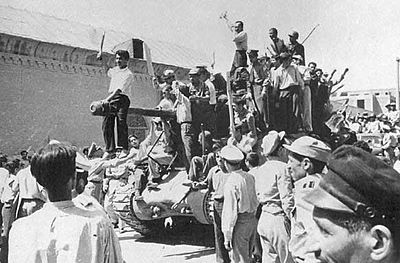
The first attempt, on the night of 15–16 August, failed when the officer delivering the dismissal decree was arrested, and the shah fled to Baghdad and then Rome. On 19 August crowds, some of them organised and paid, joined army and police units in seizing key sites in Tehran. Fighting around Mosaddegh's house was intense; estimates of the day's dead vary, and figures of around two to three hundred are often cited by historians. Mosaddegh surrendered the following day.
The American role was long officially unacknowledged. A 1954 internal CIA history by Donald Wilber was leaked to The New York Times in 2000, and in 2013 the National Security Archive published a declassified CIA history stating that the coup "was carried out under CIA direction as an act of U.S. foreign policy". In 2017 the State Department published a retrospective Foreign Relations of the United States volume documenting the operation. US officials, including Secretary of State Madeleine Albright in 2000, have acknowledged the American role; the British government has not formally released its records or confirmed its part.
The Role of Iranian Actors
The documents do not tell the whole story. The coup succeeded on its second attempt partly because of developments the CIA did not fully control: the readiness of army units to move against the government, opposition among clerics and bazaar merchants, royalist anger at the shah's flight, and Mosaddegh's decision to order the police to clear the streets after Tudeh demonstrations on 17–18 August, which kept many of his own supporters at home.
Some scholars, notably Darioush Bayandor and Ray Takeyh, argue that domestic forces, including senior clerics, were decisive and that Washington had nearly given up after the first failure. Others, including Mark Gasiorowski, Ervand Abrahamian and Malcolm Byrne, stress that foreign planning, money and the shah's decrees were indispensable. Many historians now describe a combination: a foreign-organised operation that succeeded because it found Iranian allies at a moment of deep domestic division.
Aftermath and Legacy
Zahedi became prime minister and the shah returned on 22 August. Mosaddegh was tried by a military court, served three years in prison and lived under house arrest at Ahmadabad until his death in 1967. His foreign minister, Hossein Fatemi, was executed in 1954, and the Tudeh Party's military network was uncovered and dismantled the same year.
In 1954 a new agreement created an international consortium of British, American, Anglo-Dutch and French companies to operate Iran's oil industry under nominal Iranian ownership, with profits split roughly fifty-fifty. Nationalization remained formally in place, but control of production and marketing rested largely with foreign firms.
In the decades that followed, the shah's rule became increasingly personal. Many historians count the memory of 1953 among the causes of the 1979 revolution and of lasting mistrust between Iran and the United States, though they differ on how much weight it deserves beside other factors.
Frequently asked questions
Did the CIA overthrow Mosaddegh?
Declassified CIA records state that the coup was carried out under CIA direction, with British MI6 as a partner. Historians agree the US and UK planned and financed it, but debate how decisive that role was compared with Iranian officers, clerics, royalists and political opponents who took part.
Why was Mosaddegh overthrown?
The immediate background was the 1951 nationalization of the Anglo-Iranian Oil Company and the resulting dispute with Britain. American leaders also feared communist gains during Iran's economic crisis, while inside Iran Mosaddegh had lost key allies and faced opposition from the court, parts of the army and some clerics.
What happened on 28 Mordad?
On 28 Mordad 1332 (19 August 1953), crowds and army units loyal to the shah seized key sites in Tehran, attacked Mosaddegh's residence and brought General Fazlollah Zahedi to power as prime minister. Mosaddegh surrendered the next day.
What happened to Mosaddegh after the coup?
He was tried by a military court and sentenced to three years in prison. After his release he lived under house arrest on his estate at Ahmadabad, west of Tehran, until his death in March 1967.
Key events on the map
- 1953 CE · 1953 CIA/MI6 Coup (Operation Ajax)
- 1901 CE · D'Arcy Oil Concession
- 1909 CE · Anglo-Persian Oil Company Founded
- 1951 CE · Nationalization of Oil
- 1979 CE · Iranian Revolution
Guided storylines
- Coup d'État of 1332 Š./1953 — Encyclopaedia Iranica
- CIA Confirms Role in 1953 Iran Coup — National Security Archive, George Washington University
- The Battle for Iran, 1953: Re-Release of CIA Internal History — National Security Archive, George Washington University
- Foreign Relations of the United States, 1952–1954, Iran, 1951–1954 — U.S. Department of State, Office of the Historian