Pahlavi Dynasty: Iran under Reza Shah and Mohammad Reza Shah (1925–1979)
The Pahlavi dynasty (1925–1979): Reza Shah’s state building, oil nationalisation and the 1953 coup, the White Revolution and the 1979 revolution.
 Open the interactive map
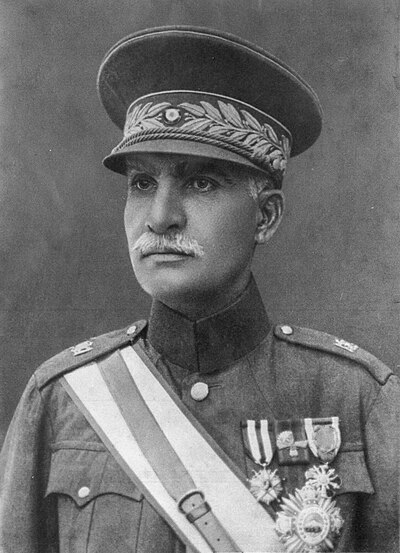
Reza Shah and the founding of the Pahlavi dynasty
The Pahlavi dynasty ruled Iran from 1925 to 1979 under two monarchs, Reza Shah and his son Mohammad Reza Shah. Reza Khan, an officer of the Persian Cossack Brigade, took part in the 1921 coup, became minister of war and then prime minister, and was named shah by a constituent assembly in December 1925 after the Majles deposed the Qajars.
Reza Shah built a centralised state: a conscript army, a modern bureaucracy, secular law codes, the University of Tehran (1934) and the Trans-Iranian Railway (completed 1938). From 1935 the government asked foreign states to use the name Iran rather than Persia, and in 1936 it banned the veil in public. His rule was also authoritarian: the press and parliament were controlled, nomadic tribes were forcibly settled and opponents were imprisoned. After British and Soviet forces invaded in 1941, he abdicated in favour of his son.
Mohammad Reza Shah: oil, coup and the White Revolution
The 1940s brought a more open political scene. In 1951 the Majles, driven by the National Front of Mohammad Mosaddegh, nationalised the British-controlled oil industry, and Mosaddegh became prime minister. In August 1953 Mosaddegh was overthrown in a coup organised by the CIA and British intelligence together with Iranian royalists, army officers and other domestic opponents; the CIA acknowledged its role in documents released in 2013, while historians still debate the relative weight of foreign and Iranian actors.
From 1963 the Shah’s White Revolution introduced land reform, votes for women and a Literacy Corps. Supporters credit the era with rapid growth, especially after the 1973 oil price boom, expanded education and new opportunities for women. Critics point to one-man rule, the SAVAK security service, which Amnesty International and other human-rights groups accused of torturing political prisoners, the single Rastakhiz party created in 1975, inequality and the alienation of religious and secular opponents alike.
The end of the Pahlavi monarchy
Mass protests in 1978 united clerics led by the exiled Ayatollah Ruhollah Khomeini, students, bazaar merchants, workers and leftist and liberal groups. The Shah left Iran on 16 January 1979, the monarchy collapsed on 11 February, and a referendum that spring established the Islamic Republic. Mohammad Reza Shah died in exile in Cairo in July 1980. The Pahlavi era remains one of the most debated periods in Iranian history, judged very differently by different Iranians.
Timeline of events
1925 CE · Reza Shah Founds the Pahlavi Dynasty
Reza Khan deposes the last Qajar shah and crowns himself Reza Shah Pahlavi, beginning an ambitious program of modernization and centralization. (Tehran) View on map
1927 CE · Abolition of Capitulations
Reza Shah unilaterally abolishes the capitulations — centuries-old treaties that granted foreign nationals extraterritorial legal immunity in Iran, exempting them from Iranian law and taxes. This act, effective May 10, 1928, restores judicial sovereignty and is celebrated as a landmark in Iranian independence. (Tehran) View on map
1934 CE · University of Tehran Founded
The University of Tehran, Iran's first modern university, is established, modeled on European universities. It becomes the country's leading institution of higher education. (Tehran) View on map
1935 CE · Reza Shah's Modernization Reforms
Reza Shah implements sweeping reforms: modern legal codes, mandatory Western dress, ban on women's veils (1936), new civil registry, and secular education system. (Tehran) View on map
1935 CE · Persia Officially Renamed Iran
Reza Shah requests the international community to use 'Iran' instead of 'Persia', the name Iranians have always used for their country, meaning 'Land of the Aryans'. (Tehran) View on map
1935 CE · Goharshad Mosque Uprising
Protests against Reza Shah's forced unveiling policy and dress code reforms at Goharshad Mosque in Mashhad are violently suppressed by the army. (Mashhad) View on map
1937 CE · Sadegh Hedayat: Father of Modern Persian Literature
Sadegh Hedayat publishes 'The Blind Owl' (Buf-e Kur), considered the greatest Persian novel and a masterpiece of world literature, pioneering modernist writing in Iran. (Tehran) View on map
1938 CE · Trans-Iranian Railway Completed
The Trans-Iranian Railway, connecting the Caspian Sea to the Persian Gulf across 1,394 km of mountains and deserts, is completed — a monumental engineering achievement. (Tehran (hub)) View on map
1941 CE · Anglo-Soviet Invasion of Iran
Britain and the Soviet Union invade neutral Iran to secure oil supplies and a supply corridor to the USSR. Reza Shah is forced to abdicate in favor of his young son Mohammad Reza. (Iran (nationwide)) View on map
1943 CE · Tehran Conference
Roosevelt, Churchill, and Stalin meet in Tehran for their first joint conference, planning the Normandy invasion and shaping the post-war world order. (Soviet Embassy, Tehran) View on map
1946 CE · Iran Crisis of 1946 (Azerbaijan Crisis)
Soviet-backed separatist movements establish the People's Government of Azerbaijan and the Republic of Mahabad (Kurdish). Iran, with US support, reclaims these regions. (Tabriz / Mahabad) View on map
1951 CE · Nationalization of Oil
Prime Minister Mohammad Mosaddegh nationalizes the Anglo-Iranian Oil Company, asserting Iranian sovereignty over its resources. This leads to a British oil embargo and international crisis. (Tehran) View on map
1953 CE · 1953 CIA/MI6 Coup (Operation Ajax)
A CIA and MI6-orchestrated coup overthrows Prime Minister Mosaddegh and restores full power to Mohammad Reza Shah. This event profoundly shapes Iranian attitudes toward the West. (Tehran) View on map
1963 CE · White Revolution
Mohammad Reza Shah launches the 'White Revolution': land reform, women's suffrage, literacy corps, nationalization of forests, and profit-sharing for workers. It transforms Iranian society. (Tehran) View on map
1963 CE · Women's Suffrage in Iran
Iranian women gain the right to vote and run for office as part of the White Revolution reforms, making Iran one of the first Middle Eastern countries to enfranchise women. (Tehran) View on map
1963 CE · Literacy Corps (Sepah-e Danesh)
The Literacy Corps sends educated conscripts to rural areas to teach reading and writing. It dramatically reduces illiteracy rates, especially among women. (Iran (nationwide)) View on map
1964 CE · Khomeini Exiled
Ayatollah Ruhollah Khomeini is arrested and exiled for opposing the White Revolution and the Shah's policies. He goes to Turkey, then Iraq, and finally France. (Tehran/Qom) View on map
1969 CE · Golden Age of Iranian Cinema Begins
Iranian New Wave cinema emerges with Dariush Mehrjui's 'The Cow' (1969) and later Abbas Kiarostami, bringing Iranian cinema to international acclaim. (Tehran) View on map
1971 CE · 2,500-Year Celebration of Persian Empire
The Shah hosts an extravagant celebration at Persepolis marking 2,500 years of Iranian monarchy. World leaders attend, but the lavish spending draws domestic and international criticism. (Persepolis) View on map
1973 CE · OPEC Oil Crisis and Iran's Oil Wealth
The 1973 oil embargo and price quadrupling floods Iran with petroleum wealth. The Shah accelerates modernization but growing inequality fuels social tensions. (Tehran) View on map
1974 CE · Iran's Nuclear Program Begins
Mohammad Reza Shah launches Iran's nuclear energy program with US support, signing contracts for multiple nuclear reactors, including the Bushehr plant built by Germany. (Bushehr) View on map
1975 CE · Founding of Rastakhiz Party
Mohammad Reza Shah dissolves all existing political parties and creates the Rastakhiz (Resurgence) Party as Iran's sole legal political party, declaring that every Iranian must join. This move toward a single-party authoritarian state deepens public resentment and is widely seen as one of the political miscalculations that accelerated the path to revolution. (Tehran) View on map
1979 CE · Iranian Revolution
Massive nationwide protests force Mohammad Reza Shah to leave Iran. Ayatollah Khomeini returns from exile and establishes the Islamic Republic of Iran, transforming the country's political system. (Tehran) View on map
Frequently asked questions
How did the Pahlavi dynasty start?
Reza Khan, a Cossack Brigade officer, took part in the February 1921 coup, rose to prime minister, and after the Majles deposed the Qajars in October 1925 a constituent assembly proclaimed him shah in December 1925.
Why did the Pahlavi dynasty fall?
Historians point to several causes: political repression and the closing of legal opposition, uneven economic growth and inflation after the oil boom, resentment of foreign influence, and the ability of a broad coalition under Khomeini’s leadership to mobilise mass protest in 1978. Their relative importance is debated.
Key events on the map
- 1925 CE · Reza Shah Founds the Pahlavi Dynasty
- 1951 CE · Nationalization of Oil
- 1963 CE · White Revolution
- 1979 CE · Iranian Revolution
Guided storylines
- Iran ii. Iranian History (2) Islamic Period (page 6) — Encyclopaedia Iranica
- Industrialization i. The Reza Shah Period and Its Aftermath, 1925–53 — Encyclopaedia Iranica
- Army vi. Pahlavi Period — Encyclopaedia Iranica
- Coup d’Etat of 1332 Š./1953 — Encyclopaedia Iranica