Qajar Dynasty: Iran from 1789 to 1925
The Qajar dynasty (1789–1925): Tehran as capital, wars with Russia, Amir Kabir’s reforms, foreign concessions and the Constitutional Revolution.
 Open the interactive map
The rise of the Qajar dynasty
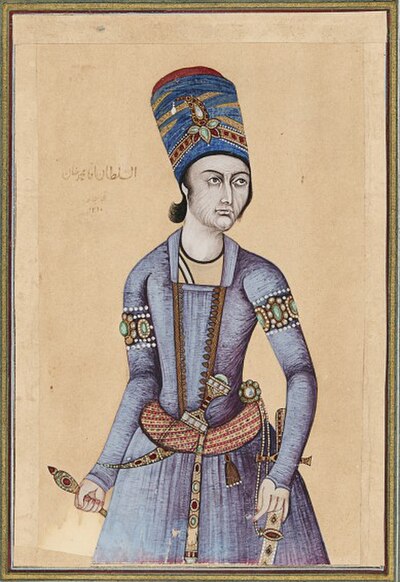
The Qajar dynasty ruled Iran from the late eighteenth century until 1925. The Qajars were a Turkic tribe, one of the old Qizilbash supporters of the Safavids, settled around Astarabad in the southeast Caspian region. Agha Mohammad Khan, castrated as a boy by a rival ruler, fought his way to power after Karim Khan Zand’s death, made Tehran his capital in the 1780s, defeated the last Zand ruler in 1794, sacked Tbilisi in 1795 and was formally crowned in 1796. He was assassinated in 1797.
Wars, reforms and foreign pressure
Under Fath-Ali Shah, Iran lost two wars to Russia. The treaties of Golestan (1813) and Turkmenchay (1828) surrendered the South Caucasus, including much of today’s Georgia, Armenia and the Republic of Azerbaijan, and granted Russian subjects extraterritorial rights. Crown Prince Abbas Mirza began military modernisation, and under Naser al-Din Shah, who reigned for almost fifty years, the chief minister Amir Kabir reformed finances and founded the Dar al-Fonun polytechnic, which opened in 1851 just after his dismissal; he was killed on the shah’s orders in 1852.
Britain and Russia competed for influence in what is often called the Great Game. Cash-strapped shahs sold concessions to foreigners, from the sweeping Reuter concession of 1872 to the tobacco monopoly that provoked a nationwide protest and boycott in 1891–92, backed by a ruling attributed to the leading cleric Mirza Hasan Shirazi. The 1901 D’Arcy concession led to the discovery of oil in 1908.
Constitutional Revolution, decline and legacy
In 1906 a coalition of merchants, clerics and reformist intellectuals forced Mozaffar al-Din Shah to accept a parliament, the Majles, and a constitution. In 1907 Britain and Russia divided Iran into spheres of influence without consulting it. Mohammad Ali Shah shelled the Majles in 1908 but was deposed by constitutionalist forces in 1909. Iran was later occupied by foreign armies in the First World War despite declaring neutrality, and struck by famine in 1917–19, whose death toll remains disputed. After the 1921 coup, Reza Khan rose to dominance and the Majles deposed the Qajars in 1925. The era left Iran’s modern borders, its capital, its first constitution and a vivid tradition of painting and photography.
Timeline of events
1786 CE · Tehran Becomes the Capital
Around 1786 Agha Mohammad Khan makes Tehran, then a modest town at the foot of the Alborz mountains, his capital, choosing it for its closeness to the Qajar tribal lands in the north. He is formally crowned shah a decade later, in 1796. (Tehran) View on map
1789 CE · Agha Mohammad Khan Founds the Qajar Dynasty
Agha Mohammad Khan Qajar defeats the last Zand ruler, unifies Iran, and establishes the Qajar dynasty with Tehran as the new capital. (Tehran) View on map
1795 CE · Battle of Krtsanisi & Sack of Tbilisi
Agha Mohammad Khan Qajar invades Georgia, defeats King Heraclius II at the Battle of Krtsanisi, and sacks Tbilisi. Thousands are killed or enslaved. The devastation pushes Georgia to seek Russian protection, setting the stage for Russo-Persian conflict. (Tbilisi, Georgia) View on map
1804 CE · First Russo-Persian War
Iran fights Russia over Georgia and the Caucasus. Despite initial successes, Iran is defeated. Crown Prince Abbas Mirza leads the Persian forces. (Caucasus) View on map
1811 CE · Abbas Mirza's Military Modernization
Crown Prince Abbas Mirza attempts to modernize the Iranian military along European lines, sending students to Europe and establishing modern factories in Tabriz. (Tabriz) View on map
1813 CE · Treaty of Golestan
Iran cedes most of the eastern Caucasus territories (modern Georgia, Dagestan, parts of Azerbaijan) to Russia after the First Russo-Persian War. (Golestan (Caucasus)) View on map
1823 CE · First Treaty of Erzurum
Iran and the Ottoman Empire sign the First Treaty of Erzurum, attempting to settle their long-disputed border in Mesopotamia and the Caucasus. The treaty fails to resolve the question of sovereignty over key border regions. (Erzurum, Ottoman Empire) View on map
1826 CE · Second Russo-Persian War
Iran attempts to recapture lost Caucasian territories. Despite Abbas Mirza's modernized forces, Iran suffers defeat at Russian hands. (Caucasus) View on map
1827 CE · Siege of Erivan: The Lions of Iran
Russian forces under Ivan Paskevich besieged the fortress of Erivan during the Second Russo-Persian War. The Iranian governor Hossein Qoli Khan and his brother Hassan Khan Sari Aslan defended the citadel through repeated assaults, earning the popular epithet 'Lions of Iran'. The fortress fell on October 1, 1827, opening the road to the Treaty of Turkmenchay and Iran's loss of the South Caucasus. (Erivan Fortress (Yerevan)) View on map
1828 CE · Treaty of Turkmenchay
Iran cedes remaining Caucasian territories (modern Armenia, Republic of Azerbaijan) to Russia. This humiliating treaty marks the nadir of Qajar power and Iranian territorial loss. (Turkmenchay) View on map
1829 CE · Murder of Griboyedov at Russian Embassy
Russian ambassador Alexander Griboyedov is killed when a mob attacks the Russian embassy in Tehran, creating a diplomatic crisis. Iran sends the Shah Diamond as apology. (Tehran) View on map
1837 CE · Siege of Herat (1837–1838)
Mohammad Shah Qajar besieges Herat for nine months in an attempt to reclaim the city as part of Iran. Britain, fearing Persian-Russian advances toward India, intervenes diplomatically and militarily, forcing Iran to withdraw. (Herat) View on map
1844 CE · The Bab Declares His Mission
Siyyid Ali Muhammad Shirazi declares himself 'the Bab' (the Gate), founding the Babi faith. The movement is violently suppressed by Qajar authorities. (Shiraz) View on map
1846 CE · Decipherment of the Behistun Inscription
Sir Henry Rawlinson deciphers the Old Persian cuneiform script at the Behistun Inscription, unlocking the ancient languages of Mesopotamia and Persia. (Behistun, Kermanshah) View on map
1847 CE · Second Treaty of Erzurum
Mediated by Britain and Russia, the Second Treaty of Erzurum settles the Ottoman-Persian border more definitively. Iran gives up claims to Sulaymaniyah while the Ottomans acknowledge Iranian sovereignty over the port of Mohammerah (Khorramshahr) and eastern Shatt al-Arab navigation rights. (Erzurum, Ottoman Empire) View on map
1848 CE · Amir Kabir's Reforms
Mirza Taqi Khan Amir Kabir, Iran's greatest reformist prime minister, establishes the Dar al-Fonun polytechnic, modernizes the administration, and fights corruption before being executed by the Shah. (Tehran) View on map
1848 CE · Tahirih Qurratu'l-Ayn: The Poetess
Fatimah Baraghani, known as Tahirih (the Pure), becomes a prominent Babi leader and one of the first women in Iran to publicly remove her veil at the Conference of Badasht (1848). A gifted poet and theologian, her act symbolizes a break with tradition. She is executed in 1852, reportedly telling her executioner: 'You can kill me, but you cannot stop the emancipation of women.' (Badasht, Mazandaran) View on map
1851 CE · Establishment of Dar al-Fonun
Amir Kabir establishes Dar al-Fonun, Iran's first modern institution of higher education, teaching medicine, engineering, military science, and foreign languages. (Tehran) View on map
1856 CE · Anglo-Persian War over Herat
Iran briefly captures Herat, leading to war with Britain. The Treaty of Paris forces Iran to recognize Afghan independence and give up claims to Herat permanently. (Herat) View on map
1857 CE · Treaty of Paris (1857)
Ending the Anglo-Persian War, the Treaty of Paris forces Iran to withdraw from Herat, recognize Afghan independence, and pledge never to interfere in Afghan affairs. Iran permanently loses its historical claim to the city. Britain gains dominant influence over Afghanistan as a buffer against Russia. (Paris, France) View on map
1858 CE · First Telegraph Line in Iran
The first telegraph line connects Tehran to major cities, later extended by Britain to India via Iran. This begins Iran's integration into global communications. (Tehran) View on map
1872 CE · Reuter Concession
Nasir al-Din Shah grants Baron Julius de Reuter a sweeping concession over Iran's resources, industry, and banking. Lord Curzon calls it 'the most extraordinary surrender of the entire resources of a kingdom'. (Tehran) View on map
1873 CE · Naser al-Din Shah Visits Europe
Naser al-Din Shah becomes the first Iranian monarch to visit Europe, traveling to Russia, Britain, France, Belgium, and other countries. His detailed travel diaries become bestsellers in Iran and spark public fascination with European modernity — and debate over Westernization. (Europe (Paris, London, St. Petersburg)) View on map
1879 CE · Formation of the Persian Cossack Brigade
Naser al-Din Shah, impressed by Russian Cossack cavalry during his European travels, establishes the Persian Cossack Brigade with Russian officers. It becomes Iran's most effective military unit — but also a tool of Russian influence. Reza Khan later rises through its ranks to seize power. (Tehran) View on map
1881 CE · Treaty of Akhal
After Russia's conquest of Turkmen territories, Iran signs the Treaty of Akhal, ceding claims to the Merv oasis and eastern Turkmen lands. This finalizes Iran's northeastern border and the loss of Central Asian territories that had been part of the Iranian world for millennia. (Akhal (Ashgabat region)) View on map
1891 CE · Tobacco Protest (Tobacco Movement)
A nationwide boycott of tobacco, led by a fatwa from Mirza Shirazi, forces Nasir al-Din Shah to cancel the British tobacco monopoly. The first successful mass protest in modern Iranian history. (Tehran (nationwide)) View on map
1896 CE · Assassination of Nasir al-Din Shah
Nasir al-Din Shah is assassinated by Mirza Reza Kermani, a follower of Jamal al-Din al-Afghani, at the Shah Abdol-Azim shrine after 48 years of rule. (Shah Abdol-Azim Shrine) View on map
1901 CE · D'Arcy Oil Concession
Mozaffar ad-Din Shah grants William Knox D'Arcy a 60-year concession to explore and exploit oil across most of Iran (excluding the five northern provinces) for a meager sum and 16% of profits. This concession leads to the 1908 oil discovery and shapes Iran's turbulent 20th century. (Tehran) View on map
1906 CE · Constitutional Revolution
Mass protests by merchants, clerics, and intellectuals force Mozaffar ad-Din Shah to sign Iran's first constitution and establish a parliament (Majlis), limiting royal authority. (Tehran) View on map
1906 CE · First Majles: Iran's Parliament Opens
Iran's first parliament (Majles-e Shora-ye Melli) opens in Tehran, a triumph of the Constitutional Revolution. Delegates from across the country draft a constitution modeled on Belgian law, establishing separation of powers and citizens' rights. It marks the first democratic institution in the Middle East. (Tehran) View on map
1907 CE · Anglo-Russian Convention: Division of Iran
Britain and Russia sign a convention dividing Iran into spheres of influence — Russian in the north, British in the south — without Iranian consent. (Tehran (affected)) View on map
1908 CE · Sattar Khan: Hero of Tabriz
Sattar Khan and Bagher Khan lead the heroic resistance of Tabriz against royalist forces attempting to crush the Constitutional Revolution. (Tabriz) View on map
1908 CE · Mohammad Ali Shah Bombards the Majlis
Mohammad Ali Shah, with Russian Cossack Brigade support, bombards the parliament building, arrests constitutionalists, and suspends the constitution. (Tehran) View on map
1908 CE · Discovery of Oil at Masjed Soleyman
William Knox D'Arcy's team discovers oil at Masjed Soleyman in southwestern Iran — the first major oil find in the Middle East. This shapes Iran's destiny for the next century. (Masjed Soleyman) View on map
1909 CE · Anglo-Persian Oil Company Founded
The Anglo-Persian Oil Company (later British Petroleum/BP) is founded to exploit Iranian oil. Britain's control over Iranian oil becomes a major source of national resentment. (Masjed Soleyman) View on map
1911 CE · Morgan Shuster and the Struggle for Financial Independence
American financial advisor Morgan Shuster attempts to reform Iran's finances but is expelled under Russian pressure. He writes 'The Strangling of Persia' exposing foreign interference. (Tehran) View on map
1914 CE · Iran Occupied During World War I
Despite declaring neutrality, Iran is occupied by British, Russian, and Ottoman forces during WWI. Famine kills an estimated 2 million Iranians (the Great Famine of 1917-1919). (Iran (nationwide)) View on map
1914 CE · Jangal Movement of Gilan
Mirza Kuchik Khan leads the Jangal (Jungle) Movement in Gilan, fighting against foreign occupation and central government corruption, briefly establishing the Persian Socialist Soviet Republic. (Gilan (Rasht)) View on map
1915 CE · Rais Ali Delvari and the Tangestan Resistance
When British and Indian forces occupied Bushehr in 1915, the tribal leader Rais Ali Delvari rallied the people of Tangestan and Dashtestan into a guerrilla campaign that drove the British back from the streets and inflicted heavy losses. Delvari was killed by an internal traitor in September 1915, but the resistance continued for years and became a national symbol of grassroots defense against foreign occupation during World War I. (Delvar, Tangestan (Bushehr)) View on map
1917 CE · The Great Famine of Iran (1917–1919)
While Iran is occupied by foreign forces during WWI, a catastrophic famine kills an estimated 2 million Iranians — nearly a quarter of the population. British requisitioning of food, disrupted trade routes, and drought combine to create one of the worst humanitarian disasters in Iranian history. (Iran (nationwide)) View on map
1919 CE · Anglo-Persian Agreement of 1919
Prime Minister Vosuq od-Dowleh signs a secret agreement with Britain that would effectively make Iran a British protectorate — British advisors would control Iran's military, finances, and infrastructure. Massive public outrage, press opposition, and refusal by the Majles to ratify the agreement ultimately defeat it, making it one of the first successful acts of Iranian popular resistance to foreign domination. (Tehran) View on map
1921 CE · 1921 Coup d'État
Reza Khan, commander of the Cossack Brigade, and Seyyed Zia al-Din Tabatabaei stage a coup with British support. Reza Khan eventually becomes the dominant political figure. (Tehran) View on map
1921 CE · Soviet-Persian Treaty of Friendship
The new Soviet government renounces all Tsarist concessions and debts owed by Iran, cancels the capitulation rights from Turkmenchay, and withdraws Russian troops. However, Article VI reserves Russia's right to intervene militarily if a third power threatens it from Iranian territory — a clause later invoked in 1941. (Moscow) View on map
Frequently asked questions
Why did Iran lose the Caucasus to Russia?
Iran was defeated in the Russo-Persian wars of 1804–13 and 1826–28 by a better-trained and better-equipped Russian army. The Golestan and Turkmenchay treaties formalised the losses, and Britain, Iran’s ally on paper, gave little practical support.
When did the Qajar dynasty end?
The Majles voted to depose Ahmad Shah, the last Qajar ruler, on 31 October 1925, and a constituent assembly named Reza Khan shah that December, founding the Pahlavi dynasty.
Key events on the map
- 1789 CE · Agha Mohammad Khan Founds the Qajar Dynasty
- 1828 CE · Treaty of Turkmenchay
- 1851 CE · Establishment of Dar al-Fonun
- 1906 CE · Constitutional Revolution
Guided storylines
- Qajar Dynasty — Encyclopaedia Iranica
- Fatḥ-ʿAlī Shah Qājār — Encyclopaedia Iranica
- Constitutional Revolution i. Intellectual Background — Encyclopaedia Iranica
- Iran ii. Iranian History (2) Islamic Period (page 5) — Encyclopaedia Iranica