Safavid Dynasty: The Empire That Shaped Modern Iran (1501–1736)
The Safavid dynasty: Shah Ismail’s Shi‘i state, the Ottoman wars, Shah Abbas’s Isfahan and the 1722 fall — the empire that shaped modern Iran.
 Open the interactive map
Overview: who were the Safavids?
The Safavid dynasty ruled Iran from 1501 to 1722, with nominal shahs surviving until 1736, and is often seen as the foundation of the modern Iranian state. The family led the Safaviyya, a Sufi order founded at Ardabil by Shaykh Safi al-Din (died 1334). Over the fifteenth century the order became militant and drew devoted Turkmen followers known as the Qizilbash, the red heads, after their distinctive red caps.
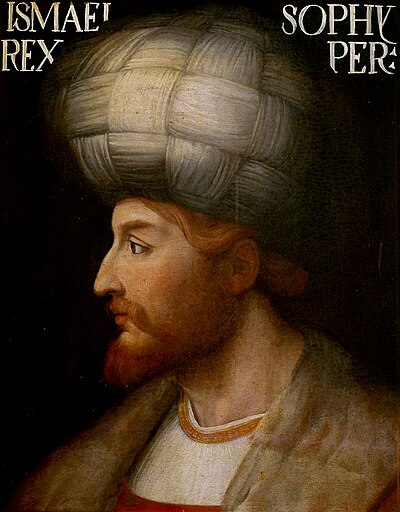
In 1501 the young Ismail, only about fourteen, entered Tabriz with Qizilbash support, took the title shah and proclaimed Twelver Shi‘ism the state religion. Iran was then majority Sunni, and conversion took generations, combining coercion, the import of Shi‘i scholars from Lebanon and Bahrain, and new rituals of mourning for Imam Husayn.
Rivals and reforms: from Chaldiran to Shah Abbas
The Safavids faced the Ottomans to the west and the Uzbeks to the east. The Ottoman victory at Chaldiran in 1514 ended Ismail’s aura of invincibility, and the Treaty of Amasya in 1555 brought a long pause. Shah Tahmasp I moved the capital to Qazvin and patronised manuscript painting. Shah Abbas I (reigned 1588–1629) curbed Qizilbash power with a corps of ghulams, many of them Georgian, Armenian and Circassian converts, retook lost territory, expelled the Portuguese from Hormuz in 1622 with English help, and made Isfahan his capital, building Naqsh-e Jahan Square and resettling Armenian merchants in New Julfa to run the silk trade.
Decline and legacy
The Treaty of Zuhab in 1639 roughly set the Iran–Ottoman frontier that still echoes in today’s Iran–Iraq and Iran–Turkey borders. Later shahs were raised in the harem, and the army and finances weakened. In 1722 Afghan forces led by Mahmud Hotaki defeated the Safavid army at Gulnabad and starved Isfahan into surrender. The Safavid legacy includes a Shi‘i national identity, Isfahan’s architecture, the philosophy of Mulla Sadra and a lasting idea of Iran’s territorial shape.
Timeline of events
1501 CE · Ismail I Crowns Himself Shah
Ismail I, at age 14, defeats the Aq Qoyunlu and establishes the Safavid dynasty in Tabriz, making Twelver Shi'ism the official state religion of Iran. (Tabriz) View on map
1501 CE · Safavid Forced Conversion to Shia Islam
Ismail I mandates Twelver Shi'ism as the state religion, importing Shia scholars from Lebanon (Jabal Amil), Bahrain, and Iraq to convert the largely Sunni population. This momentous decision — enforced through both persuasion and coercion over generations — creates the Shia identity that defines Iran to this day, distinguishing it from its Ottoman and Mughal neighbors. (Tabriz) View on map
1514 CE · Battle of Chaldiran
The Ottoman Empire defeats Shah Ismail I at Chaldiran using superior firearms. This pivotal battle defines the Ottoman-Safavid border and deepens the Sunni-Shia divide. (Chaldiran) View on map
1524 CE · Reign of Shah Tahmasp I
Shah Tahmasp I rules for 52 years, the longest Safavid reign. He resists Ottoman and Uzbek invasions while moving the capital to Qazvin and patronizing miniature painting. (Qazvin) View on map
1525 CE · Shah Tahmasp's Patronage of the Arts
Shah Tahmasp I commissions the legendary Shahnameh of Shah Tahmasp, one of the greatest illustrated manuscripts ever created, with 258 paintings by the finest artists of the age including Sultan Muhammad and Mir Musavvir. His court at Tabriz becomes the artistic capital of the Islamic world. (Tabriz, Iran) View on map
1555 CE · Treaty of Amasya
Shah Tahmasp I and Ottoman Sultan Suleiman the Magnificent sign the Peace of Amasya, the first formal peace treaty between the Safavid and Ottoman empires. The treaty establishes borders that will last for decades: Iraq and most of Kurdistan go to the Ottomans, while eastern Armenia and Azerbaijan remain Safavid. It ends nearly forty years of intermittent warfare. (Amasya, Turkey) View on map
1588 CE · Rise of Shah Abbas I the Great
Shah Abbas I ascends the throne and transforms Iran into a major world power. He modernizes the army with gunpowder weapons, defeats the Ottomans and Uzbeks, and recaptures lost territories. (Qazvin) View on map
1598 CE · Isfahan Becomes Capital — 'Half the World'
Shah Abbas I moves the capital to Isfahan and transforms it into one of the world's most magnificent cities. The saying 'Isfahan nesf-e jahan' (Isfahan is half the world) captures its grandeur. (Isfahan) View on map
1600 CE · Golden Age of Persian Carpet Weaving
Under the Safavids, Persian carpet weaving reaches its artistic zenith. Royal workshops in Isfahan, Kashan, and Tabriz produce masterpieces now in world museums. (Isfahan) View on map
1600 CE · Safavid-European Diplomatic Exchanges
Shah Abbas I initiates extensive diplomatic exchanges with European powers — sending and receiving ambassadors from Spain, England, the Papacy, and the Habsburg Empire. The Safavids and Europeans share a common enemy in the Ottoman Empire, and Abbas seeks military technology (especially cannon-casting) while Europeans covet Persian silk trade. The Shirley brothers' mission (1598-99) and later embassies create a web of alliances that challenges the notion of an impermeable East-West divide. (Isfahan) View on map
1600 CE · Safavid Art and Architecture Golden Age
Under Shah Abbas I, Persian art reaches new heights: miniature painting flourishes in the Isfahan school, carpet weaving becomes a royal art, tilework achieves unprecedented complexity, and the Chahar Bagh avenue transforms Isfahan into one of the world's most beautiful cities. (Isfahan, Iran) View on map
1600 CE · Ta'ziyeh Passion Play Tradition Emerges
The Ta'ziyeh (passion play) tradition begins developing in Safavid Iran (16th–17th century) and reaches its full theatrical form in the Qajar era. These elaborate performances re-enact the tragedy of Karbala and become a central pillar of Iranian religious and artistic culture, recognized by UNESCO as an Intangible Cultural Heritage. (Iran (nationwide)) View on map
1602 CE · Construction of Naqsh-e Jahan Square
Shah Abbas I builds the Naqsh-e Jahan Square (Imam Square), one of the largest public squares in the world, surrounded by the Shah Mosque, Sheikh Lotfollah Mosque, and Ali Qapu Palace. (Isfahan) View on map
1602 CE · Si-o-se-pol Bridge Built
Allahverdi Khan, Georgian-origin general of Shah Abbas, builds the magnificent 33-arch Si-o-se-pol bridge over the Zayandeh Rud in Isfahan. (Isfahan) View on map
1606 CE · Armenian New Julfa Quarter in Isfahan
Shah Abbas I relocates Armenian merchants from Julfa to a new quarter in Isfahan, granting them religious freedom and trade privileges, creating a prosperous multicultural community. (New Julfa, Isfahan) View on map
1620 CE · Molla Sadra: Transcendent Theosophy
Molla Sadra Shirazi develops 'Transcendent Theosophy' (al-Hikma al-Muta'aliya), synthesizing Islamic philosophy, mysticism, and theology. His work remains influential in Iranian philosophy. (Shiraz) View on map
1622 CE · Recapture of Hormuz from Portugal
Shah Abbas I, with English naval assistance, recaptures the strategic island of Hormuz from the Portuguese, restoring Iranian control over Persian Gulf trade. (Hormuz Island) View on map
1639 CE · Treaty of Zuhab (Qasr-e Shirin)
Shah Safi I and Ottoman Sultan Murad IV sign the Treaty of Zuhab, establishing borders between the two empires that remain largely unchanged to this day as the Iran–Iraq and Iran–Turkey borders. The treaty ends over 150 years of Ottoman-Safavid conflicts and grants the Ottomans permanent control of Iraq and the Safavids control of the Caucasus. (Qasr-e Shirin, Iran) View on map
1722 CE · Afghan Siege and Fall of Isfahan
Afghan Ghilzai forces under Mahmud Hotaki besiege and capture Isfahan after a devastating siege causing mass famine. This marks the effective end of Safavid rule. (Isfahan) View on map
1722 CE · Battle of Gulnabad and Fall of the Safavids
An Afghan force under Mahmud Hotaki defeats the much larger Safavid army at Gulnabad near Isfahan, leading to the siege and fall of Isfahan after six months of starvation. The 222-year Safavid dynasty effectively ends, plunging Iran into decades of chaos. (Gulnabad, Iran) View on map
Frequently asked questions
Why did the Safavids make Iran Shi‘a?
Historians debate the motives. Shi‘ism grew out of the dynasty’s own religious movement, and it also gave the Safavids a distinct identity against the Sunni Ottomans and Uzbeks. The conversion of the population was gradual and often coerced.
How did the Safavid Empire fall?
After decades of fiscal and military weakness, Afghan Hotaki forces defeated the Safavid army at Gulnabad in 1722 and took Isfahan after a long siege. Safavid princes remained figureheads until Nader Shah ended the dynasty in 1736.
Key events on the map
- 1501 CE · Ismail I Crowns Himself Shah
- 1514 CE · Battle of Chaldiran
- 1598 CE · Isfahan Becomes Capital — 'Half the World'
- 1602 CE · Construction of Naqsh-e Jahan Square
Guided storylines
- Safavid Dynasty — Encyclopaedia Iranica
- ʿAbbās I — Encyclopaedia Iranica
- Isfahan x. Monuments — Encyclopaedia Iranica
- Iran ii. Iranian History (2) Islamic Period (page 4) — Encyclopaedia Iranica