Avicenna (Ibn Sina): Life, Canon of Medicine and Legacy
Who was Avicenna (Ibn Sina)? The Bukhara-born physician-philosopher behind the Canon of Medicine and The Healing, and why his legacy is still debated.
 Open the interactive map
Who was Avicenna (Ibn Sina)?
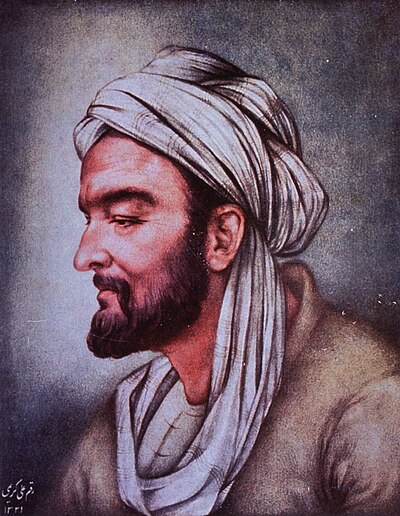
Avicenna is the Latin name of Abu Ali al-Husayn ibn Abd Allah ibn Sina (c. 980–1037), known in Iran as Bu Ali Sina or simply Ibn Sina. He was a physician, philosopher and polymath who grew up in Samanid Bukhara and spent his adult life moving between the courts of Central Asia and western Iran. Two of his books shaped learning for centuries: the Canon of Medicine (al-Qanun fi al-Tibb), a systematic medical encyclopedia, and The Healing (Kitab al-Shifa), a vast survey of logic, natural science, mathematics and metaphysics.
Like most scholars of his world, Ibn Sina wrote chiefly in Arabic, the shared language of science from Spain to Central Asia, but he also composed philosophy in Persian. His career is a window onto the Persianate courts of the late tenth and early eleventh centuries, where rival rulers competed for physicians, astronomers and poets, and where a gifted scholar could rise to the rank of vizier one year and hide from his enemies the next.
Early life in Samanid Bukhara
Most of what we know about Ibn Sina's youth comes from an autobiography he dictated to his long-time student Abu Ubayd al-Juzjani, who later completed the story of his master's life. It is an invaluable source, but also a carefully shaped self-portrait. Ibn Sina was born around 980 in Afshana, a village near Bukhara. His father, originally from Balkh, served the Samanid administration, and the household was a meeting place for learned visitors.
According to the autobiography, the boy knew the Quran and much literature by about ten, then moved through arithmetic, logic, Euclid and Ptolemy, and taught himself medicine by sixteen. He says he read Aristotle's Metaphysics forty times without understanding it until a cheap copy of a commentary by al-Farabi unlocked its purpose. Such details are vivid, but historians treat the precocity claims as Ibn Sina's own account rather than independently confirmed fact.
His medical reputation opened a decisive door. After he helped treat the Samanid ruler Nuh ibn Mansur, he was given access to the royal library of Bukhara, which he later described as a building of many rooms filled with books he had never seen elsewhere. That library, and the Samanid patronage of both Arabic learning and New Persian literature, formed the intellectual world that produced him. When the Samanid state collapsed in 999, that world broke apart and Ibn Sina's wandering years began.
A scholar on the move: Gurganj, Rayy, Hamadan and Isfahan
Ibn Sina first found a place at Gurganj, the capital of the Mamunid rulers of Khwarazm, where scholars including al-Biruni also worked; the two had already exchanged a famous series of sharp questions and answers on physics and cosmology. A later and colourful story, told by Nizami Aruzi in the twelfth century, says he fled Khwarazm to avoid a summons from Mahmud of Ghazni. It may contain a kernel of truth, but it is an anecdote, not a documented event.
After years in Gorgan and Rayy, he reached Hamadan, where he treated the Buyid prince Shams al-Dawla and twice served as his vizier. Court politics were dangerous: soldiers mutinied against him, and after his patron's death he was imprisoned for months in a fortress for corresponding with a rival ruler. Around 1024 he escaped to Isfahan and the protection of the Kakuyid ruler Ala al-Dawla, under whom he spent his most settled and productive final period.
Juzjani describes evenings when students gathered at Ibn Sina's house to read The Healing and the Canon, followed by music and wine, and he notes that his master often wrote without books at hand, even on campaign. Ibn Sina fell ill with a severe intestinal complaint while accompanying Ala al-Dawla toward Hamadan and died there in 1037. His tomb in Hamadan was rebuilt as a modern mausoleum in the early 1950s and remains a place of national commemoration.
The Canon of Medicine: what it contains and how long it lasted
The Canon of Medicine is organised in five books: general principles of health and disease, simple drugs, diseases of particular organs from head to foot, conditions affecting the whole body such as fevers and wounds, and compound remedies. Its achievement was less a series of single discoveries than a clear, logical system that joined Galenic and Hippocratic medicine, Aristotelian natural philosophy, and the clinical experience of physicians writing in Arabic, including the Iranian physician al-Razi. It also set out conditions for judging whether a drug truly works, such as testing it on uncomplicated cases and checking that its effect is consistent.
Translated into Latin by Gerard of Cremona in the twelfth century, the Canon became a core text in European medical faculties and was printed many times after 1473; parts of it were still taught in some universities in the seventeenth century. In the Islamic world it attracted generations of commentaries, and it remains a foundation of the Unani tradition practised in South Asia today.
Popular accounts sometimes say the Canon was used unchanged for six hundred years. That is an exaggeration. Readers argued with it constantly: the thirteenth-century physician Ibn al-Nafis, in a commentary on the Canon, rejected the Galenic idea that blood passes through the heart's central wall and described its passage through the lungs instead. The book's long life reflects its value as an organising framework that later physicians tested and revised.
Avicenna's philosophy: The Healing, the floating man and the Necessary Existent
Ibn Sina considered himself first a philosopher. The Healing reworks the Aristotelian sciences in his own voice, while shorter works such as The Salvation (al-Najat) and Pointers and Reminders (al-Isharat wa al-Tanbihat) condense and refine his system. His Danishnama-yi Ala'i, written for Ala al-Dawla, is one of the earliest philosophical works in New Persian and helped create a Persian technical vocabulary.
Several of his ideas became landmarks. He distinguished between what a thing is (its essence) and the fact that it exists, and argued that everything whose existence is merely possible depends ultimately on a Necessary Existent, which he identified with God. In his famous floating man thought experiment, a person created in mid-air, blindfolded and touching nothing, would still be aware of his own self, which Ibn Sina took as a pointer to the soul's independence from the body.
His synthesis provoked as much as it persuaded. Al-Ghazali's Incoherence of the Philosophers attacked positions associated with him, such as the eternity of the world, and Averroes in al-Andalus criticised him from a stricter Aristotelian stance. In Latin Europe, thinkers including Thomas Aquinas drew on translated parts of The Healing. In Iran, his thought fed a continuous tradition through Suhrawardi, Nasir al-Din Tusi's defence of the Pointers, and Molla Sadra in the Safavid era.
Persian, Arab or Uzbek? Avicenna's identity and modern memory
Because he wrote mostly in Arabic, medieval and early modern Europeans often called Ibn Sina an Arabian physician. That label described his language of scholarship rather than his origins. He was born in the Persian-speaking Samanid world, wrote Persian prose, and served Iranian dynasties throughout his life. Today Iran, Tajikistan and Uzbekistan all honour him, and his birthplace lies in modern Uzbekistan; these claims reflect modern national borders laid over a shared Persianate past rather than a contest one side must win.
In Iran his memory is especially vivid. The national Physicians' Day is celebrated on 1 Shahrivar (23 August), a date chosen to honour his birth, although his exact birthday is not documented. Many Persian quatrains circulate under his name, but scholars regard most attributions as uncertain. What is not in doubt is the scale of his influence: few writers have shaped both medicine and philosophy across so many languages and centuries.
Frequently asked questions
What is Avicenna (Ibn Sina) famous for?
He is best known for the Canon of Medicine, a five-part medical encyclopedia taught in Europe and the Islamic world for centuries, and for The Healing, a major philosophical encyclopedia that shaped Islamic, Jewish and Latin Christian thought.
Was Avicenna Persian or Arab?
He was born near Bukhara in the Persian-speaking Samanid realm and served Iranian dynasties all his life. He wrote mostly in Arabic, the international language of science at the time, which is why Europeans once called him Arabian; he also wrote philosophy in Persian.
Where is Avicenna buried?
He died in Hamadan in 1037 and is buried there. His tomb was rebuilt as a modern mausoleum with a library and museum in the early 1950s and is one of the city's best-known landmarks.
How long was the Canon of Medicine used?
After its Latin translation in the twelfth century it was a standard textbook in European universities, with parts still taught in the seventeenth century, and it remains central to Unani medicine. It was never used unchanged: physicians such as Ibn al-Nafis criticised and revised it.
Key events on the map
Guided storylines
- AVICENNA ii. Biography — Encyclopaedia Iranica
- AVICENNA i. Introductory note — Encyclopaedia Iranica
- Ibn Sina [Avicenna] — Stanford Encyclopedia of Philosophy
- Islamic Culture and the Medical Arts: Ibn Sina (Avicenna) — U.S. National Library of Medicine