Omar Khayyam: Mathematician, Astronomer and Poet of the Rubaiyat
Who was Omar Khayyam? The Persian mathematician behind cubic equations and the Jalali calendar, and the debate over which Rubaiyat he really wrote.
 Open the interactive map
Who was Omar Khayyam?
Omar Khayyam (Ghiyath al-Din Abu'l-Fath Umar ibn Ibrahim al-Khayyami, 1048 to about 1131) was a Persian mathematician, astronomer and philosopher from Nishapur in Khorasan, and the name most attached to the Persian quatrain, the rubai. In his own lifetime he was famous as a scientist; the Rubaiyat of Omar Khayyam, the work that made him world famous, is a collection whose authorship is still debated.
There are in effect two Khayyams. One is the historical scholar, securely known from his treatises and from writers who met him. The other is the poet of wine, doubt and the passing moment, built up over centuries of manuscripts and then transformed by Edward FitzGerald's Victorian English version. Understanding Khayyam means keeping both in view without collapsing one into the other.
Life in Seljuk Iran
Khayyam was born in Nishapur in 1048; the precise date, 18 May, comes from a horoscope recorded by the twelfth-century writer al-Bayhaqi. His name al-Khayyami, 'the tentmaker', may reflect his father's trade. Like other scholars of his age he depended on patrons. Around 1070 he worked in Samarkand under the protection of the jurist Abu Tahir, to whom he dedicated his great treatise on algebra.
He was then invited to Isfahan by the Seljuk sultan Malik-Shah and his vizier Nizam al-Mulk to work at an observatory, where he spent about eighteen years compiling astronomical tables. The assassination of Nizam al-Mulk and the death of Malik-Shah in 1092 ended this support, and his later years, partly spent in Merv and Nishapur, are less well documented. A popular legend makes Khayyam, Nizam al-Mulk and Hasan Sabbah, founder of the Nizari Ismaili state at Alamut, schoolfellows who swore a pact; the dates make it impossible.
Khayyam the mathematician
Khayyam's Treatise on the Demonstration of Problems of Algebra is one of the high points of medieval mathematics. Building on the algebra of al-Khwarizmi and later Persian and Arab mathematicians, he classified equations up to the third degree into systematic types and showed how to solve each kind of cubic equation geometrically, by finding the intersection of two conic sections such as a circle and a parabola. He also noted that he had not found a general arithmetic solution for cubics, a problem solved in sixteenth-century Italy.
In a commentary on the difficulties of Euclid's Elements he examined the parallel postulate, using a quadrilateral later rediscovered by Giovanni Saccheri, and discussed the theory of ratios in ways that edged toward a broader idea of number. He also wrote on arithmetic, music theory and philosophy, including short Arabic and Persian treatises on existence and on the problem of God's justice.
The Jalali calendar
In 1079 Malik-Shah's astronomers introduced a new solar calendar, named Jalali after the sultan's title Jalal al-Din. Khayyam was one of a team of scholars who worked on it; later tradition often presents him as its leader. The reform tied the start of the year, Nowruz, to the actual vernal equinox instead of letting it drift as the old 365-day calendar had, and it is the ancestor of the official calendar used in Iran and Afghanistan today.
Claims about its precision need care. Khayyam's measurement of the solar year was remarkably close to the modern value, and a 33-year cycle with eight leap years, often associated with the Jalali calendar, would be slightly more accurate than the Gregorian rule adopted in Europe in 1582. But how the original calendar handled leap years is debated, since it may have relied on observing the equinox directly, so exact error rates quoted in popular articles should be treated as approximations.
The Rubaiyat: which quatrains did Khayyam really write?
No poems survive in Khayyam's hand, and contemporaries who wrote about him praise his science, not his verse. The earliest quatrains attributed to him appear in works written several decades after his death, from the late twelfth and thirteenth centuries; the Sufi writer Najm al-Din Razi, around 1223, quoted two of them to condemn Khayyam as a godless philosopher. From then on the number grew: a Bodleian Library manuscript copied in 1460 has 158 quatrains, and later collections contain many hundreds.
Scholars call many of these 'wandering quatrains', verses also attributed to other poets that gathered around Khayyam's famous name. Critics such as Valentin Zhukovsky, Arthur Christensen and Sadegh Hedayat tried to isolate a reliable core, with estimates ranging from a handful to over a hundred poems. In the mid twentieth century, manuscripts claimed to date from the thirteenth century were published as early evidence and later exposed as forgeries. The safest view is that Khayyam probably wrote some quatrains, but no one can say with certainty which.
FitzGerald's Rubaiyat and Khayyam's world fame
Khayyam's global fame begins with Edward FitzGerald, an English scholar-poet who learned Persian with his friend Edward Cowell. Working mainly from the 1460 Bodleian manuscript and a copy of a Calcutta manuscript sent by Cowell, he published The Rubaiyat of Omar Khayyam anonymously in 1859 as 75 quatrains. It sold poorly until Dante Gabriel Rossetti and Algernon Swinburne discovered it in a bargain bin, after which it became one of the best-loved poems in English, revised by FitzGerald through several editions.
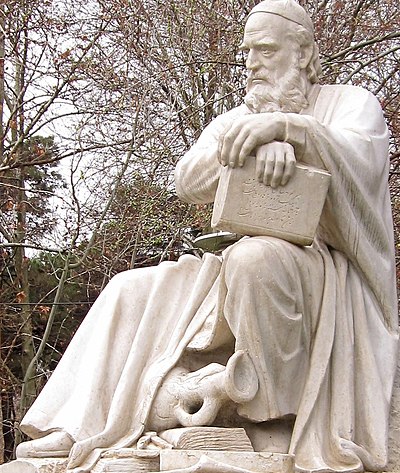
FitzGerald openly took liberties: he merged quatrains, reordered them into a single day's meditation and added images of his own. Lines such as 'a Jug of Wine, a Loaf of Bread, and Thou' are his poetry as much as Khayyam's. His version created the Western image of Khayyam as a genial hedonist, which inspired Omar Khayyam clubs and countless illustrated editions. In Iran, readers and writers such as Hedayat saw a sharper sceptic and philosopher. Khayyam's tomb in Nishapur, a modern monument completed in 1963, honours both the scientist and the poet.
Frequently asked questions
What was Omar Khayyam famous for?
In his lifetime Khayyam was famous as a mathematician and astronomer: he solved cubic equations geometrically and helped create the Jalali calendar in 1079. Today he is best known worldwide for the Rubaiyat, quatrains attributed to him and popularised by Edward FitzGerald's 1859 English version.
Did Omar Khayyam really write the Rubaiyat?
Probably some of it, but not most. The earliest attributions appear decades after his death, later manuscripts contain hundreds of quatrains also credited to other poets, and scholars disagree about which, if any, are certainly his.
How accurate is FitzGerald's Rubaiyat?
It is a free poetic adaptation rather than a literal translation. FitzGerald combined and reordered quatrains and added his own images, creating a great English poem that only partly reflects the Persian originals.
Is the Jalali calendar more accurate than the Gregorian calendar?
A 33-year leap cycle associated with it would be slightly more accurate than the Gregorian rule, and Iran's modern calendar starts each year at the astronomically calculated equinox. How the original 1079 calendar handled leap years is debated, so precise error figures are approximate.
Key events on the map
- 1070 CE · Omar Khayyam: Poet, Mathematician, Astronomer
- 820 CE · Al-Khwarizmi: Father of Algebra
- 1037 CE · Rise of the Great Seljuk Empire
- 1067 CE · Nizam al-Mulk: The Great Vizier
- 1090 CE · Alamut — The Ismaili Assassin Fortress
Guided storylines
- Khayyam, Omar i. Life — Encyclopaedia Iranica
- Khayyam, Omar ii. Poetry — Encyclopaedia Iranica
- Khayyam, Omar iv. English Translations of the Rubāʿiyāt — Encyclopaedia Iranica
- FitzGerald, Edward — Encyclopaedia Iranica
- Omar Khayyam (biography) — MacTutor History of Mathematics, University of St Andrews