Seleucid Empire in Iran: History, Timeline & Map
Seleucid Empire history (312–63 BCE): how Alexander's successors ruled Iran, why Bactria and Parthia broke away, and what endured, on a map.
 Open the interactive map
What was the Seleucid Empire?
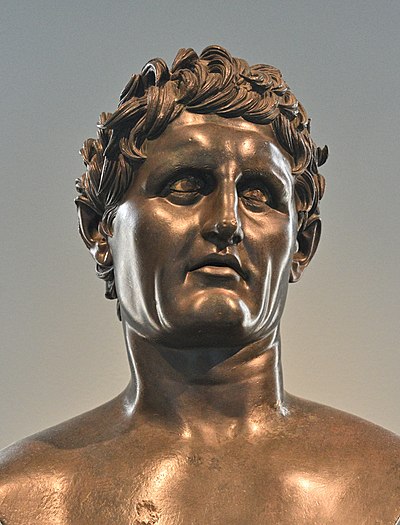
The Seleucid Empire was the largest of the kingdoms carved out of Alexander's conquests. It was founded by the Macedonian general Seleucus I, whose return to Babylon in 312 BCE launched the "Seleucid era", a dating system used in documents across the Near East for centuries. At its height it reached from Anatolia and Syria across Mesopotamia and the Iranian plateau to Bactria. For Iran, Seleucid rule (roughly 312 BCE to the mid-second century BCE) was a Greek-led government built on Achaemenid foundations rather than a clean break with the past.
Ruling Iran: Cities, Satraps and Iranian Partners
Seleucus kept much of the Achaemenid satrapal system and its Aramaic-using administration. He married Apama, daughter of the Sogdian leader Spitamenes, so his heir Antiochus I was half Iranian. Around 305 BCE he ceded the easternmost lands to the Mauryan ruler Chandragupta in return for war elephants.
New or refounded cities with Greek settlers, such as Seleucia on the Tigris and Laodicea in Media (modern Nahavand), anchored royal power, yet the kings depended on Iranian elites. In Persis, local rulers called frataraka struck coins with Iranian imagery, though their exact dates and degree of independence are debated.
Losing the East: Decline and Legacy
From the mid-third century BCE the eastern provinces drifted away: Bactria became an independent Greco-Bactrian kingdom, and the Parni under Arsaces seized Parthia. Antiochus III's eastern campaign (c. 210–205 BCE) restored Seleucid overlordship only briefly, and his defeat by Rome at Magnesia in 190 BCE crippled the dynasty.
Mithridates I of Parthia took Media and then Mesopotamia, entering Seleucia around 141 BCE; Antiochus VII's attempt to win Iran back ended with his death in battle in 129 BCE. Rome annexed the remaining Syrian kingdom in 64–63 BCE. Greek authors focus on kings and battles, while Babylonian cuneiform texts and coins from Persis show how local societies negotiated Seleucid rule.
Timeline of events
312 BCE · Seleucid Empire Established
After Alexander's death, Seleucus I Nicator secures control over the eastern territories, founding the Seleucid Empire spanning from Anatolia to Central Asia. (Seleucia) View on map
312 BCE · Seleucus I Founds the Seleucid Empire
After the Wars of the Diadochi, Seleucus I Nicator establishes the Seleucid Empire, controlling the eastern portion of Alexander's conquests including Iran, Mesopotamia, and parts of Central Asia. Seleucia on the Tigris becomes his eastern capital. (Seleucia, Iraq) View on map
305 BCE · Seleucid–Mauryan Treaty
Seleucus I Nicator cedes the eastern satrapies — Arachosia, Gedrosia, Paropamisadae, and parts of Aria — to Chandragupta Maurya in exchange for 500 war elephants. This treaty establishes the Indus River as the boundary between the Seleucid and Mauryan empires. (Arachosia (Kandahar region)) View on map
300 BCE · Founding of Antioch
Seleucus I founds Antioch as the western capital of the Seleucid Empire, which becomes one of the greatest cities of the ancient world. (Antioch) View on map
250 BCE · Greco-Bactrian Kingdom Breaks Away
Diodotus I declares independence from the Seleucids in Bactria (northern Afghanistan), establishing a Hellenistic kingdom that blends Greek and Iranian cultures. (Balkh (Bactra)) View on map
210 BCE · Antiochus III Restores Seleucid Power
Antiochus III 'the Great' launches his anabasis (eastern expedition), reconquering Parthia, Bactria, and reaching India. He briefly restores Seleucid control over the Iranian plateau, but his later defeat by Rome at Magnesia (190 BC) begins the empire's terminal decline. (Nisa, Turkmenistan) View on map
190 BCE · Battle of Magnesia
The Roman Republic decisively defeats Antiochus III at Magnesia in western Anatolia. The subsequent Treaty of Apamea (188 BC) forces the Seleucids to abandon all territory west of the Taurus Mountains, pay a massive indemnity, and surrender their war elephants — beginning the empire's terminal decline. (Magnesia ad Sipylum (Manisa, Turkey)) View on map
63 BCE · Fall of the Seleucid Empire
Pompey the Great annexes the remnant Seleucid state in Syria as a Roman province, ending the dynasty founded by Seleucus I over 250 years earlier. By this time, the Seleucids had long lost Iran to the Parthians and controlled only a small area around Antioch. (Antioch, Syria) View on map
Frequently asked questions
Was the Seleucid Empire Persian?
No. It was a Macedonian Greek dynasty founded by Seleucus I, one of Alexander's generals. It did rule Iran for over a century, kept many Achaemenid institutions and relied on Iranian elites, and its second king, Antiochus I, had an Iranian mother.
How did the Seleucids lose Iran?
Gradually: Bactria and Parthia broke away in the third century BCE, the defeat by Rome at Magnesia in 190 BCE weakened the dynasty, and the Parthian king Mithridates I conquered Media and Mesopotamia in the 140s BCE. Antiochus VII's death in 129 BCE ended Seleucid hopes of recovery.
Key events on the map
- 312 BCE · Seleucus I Founds the Seleucid Empire
- 305 BCE · Seleucid–Mauryan Treaty
- 210 BCE · Antiochus III Restores Seleucid Power
- 141 BCE · Parthians Capture Seleucia
Guided storylines
- Seleucid Empire — Encyclopaedia Iranica
- Seleucids — Livius.org
- Seleucid Empire — World History Encyclopedia